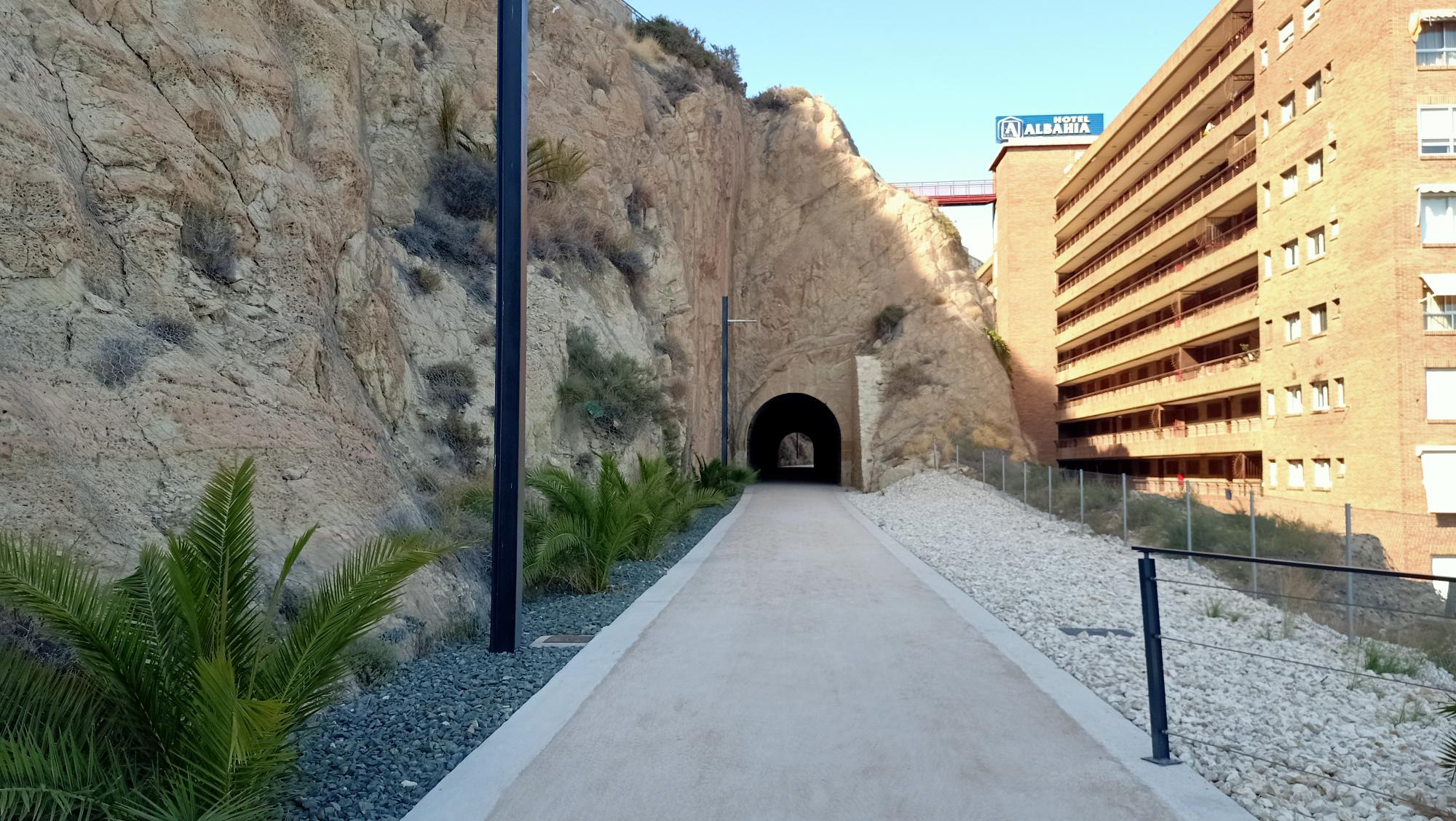
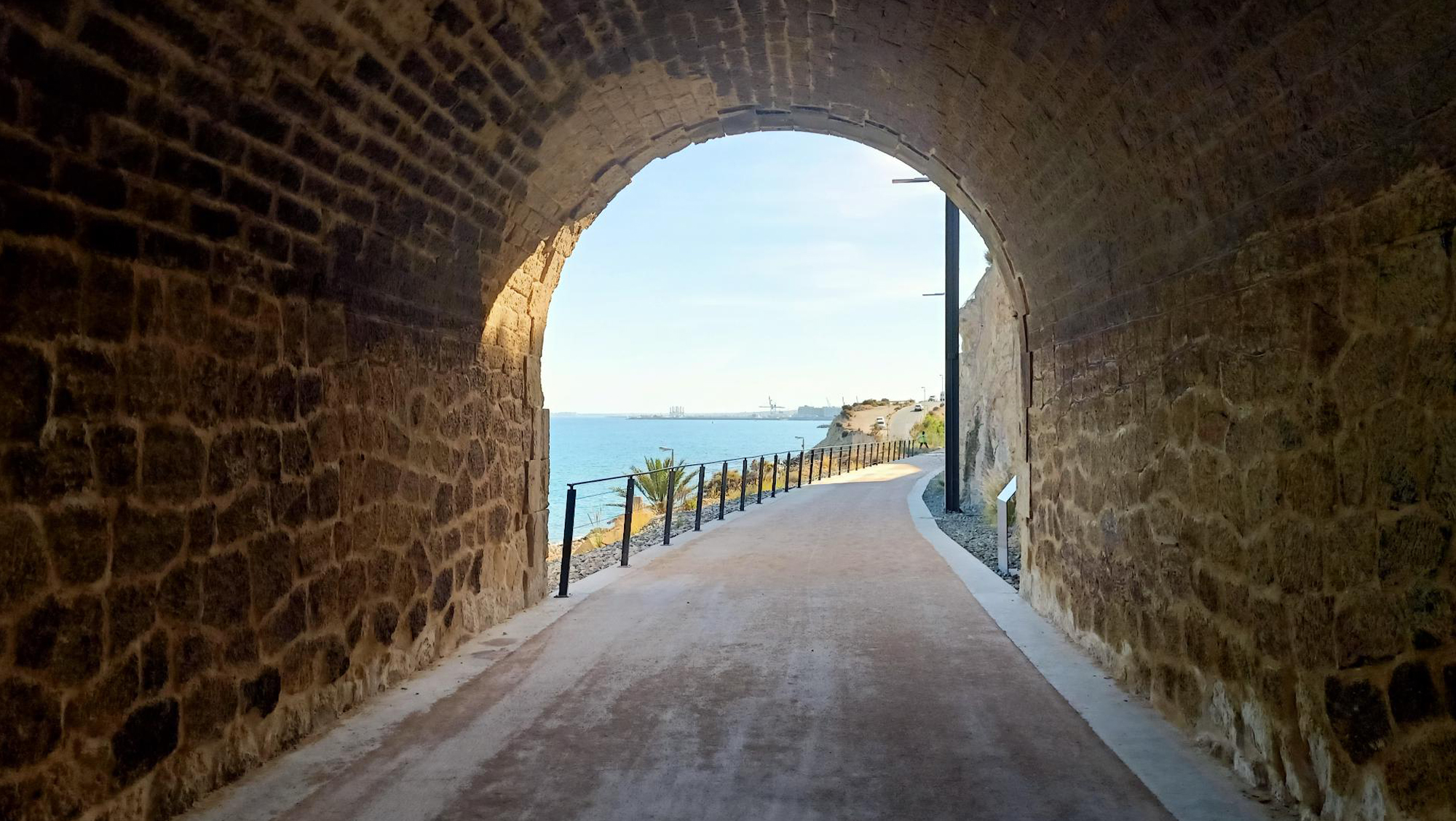
• Promontory Tunnel (15 m) — rehabilitation of the stone masonry, including repair of pathologies in the sidewalls and vault.
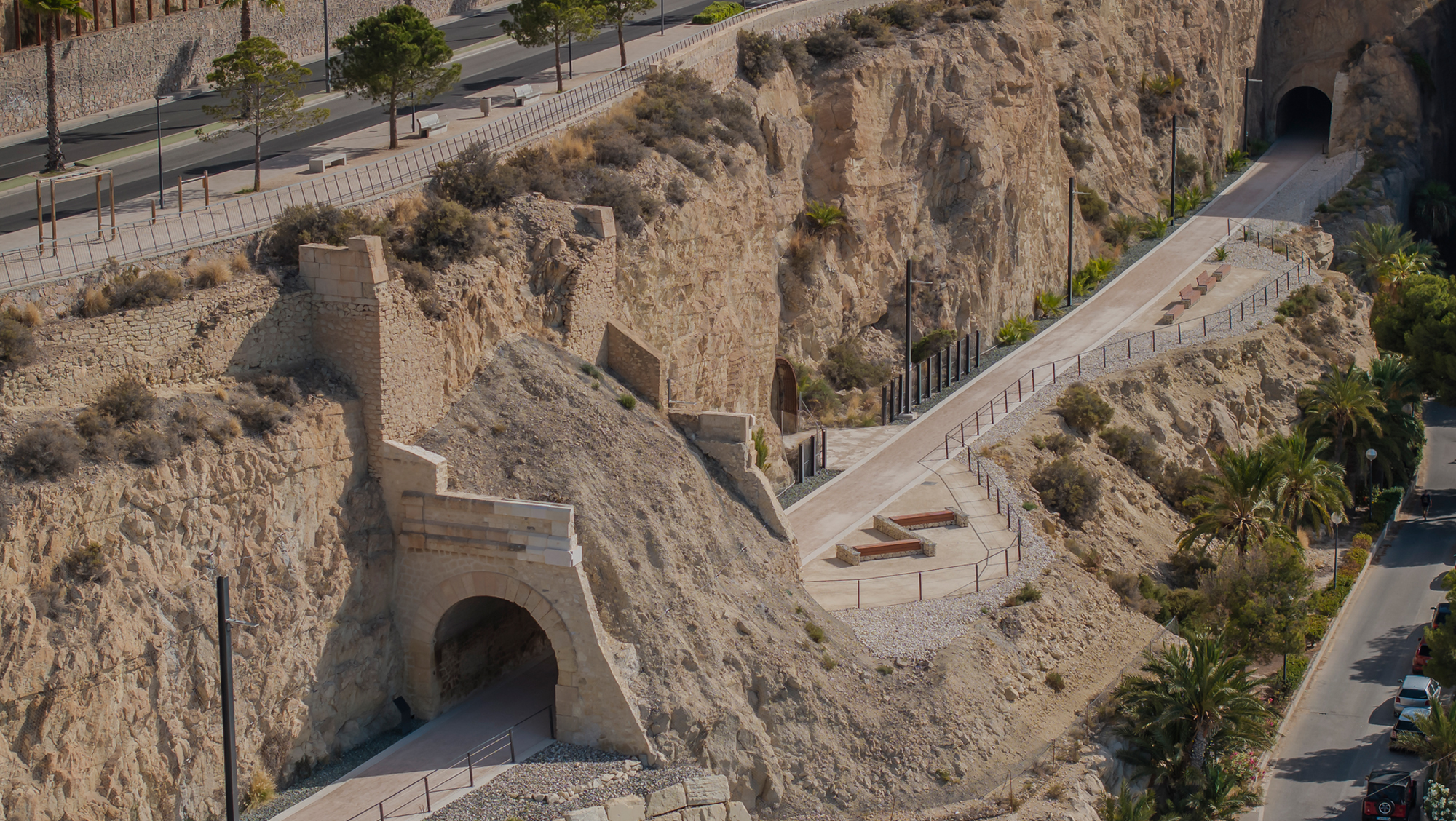
• Promontory Access Improvement — conditioning and enhancement of the access esplanade connecting the Greenway with the emergency gallery of the Serra Grossa railway tunnel.
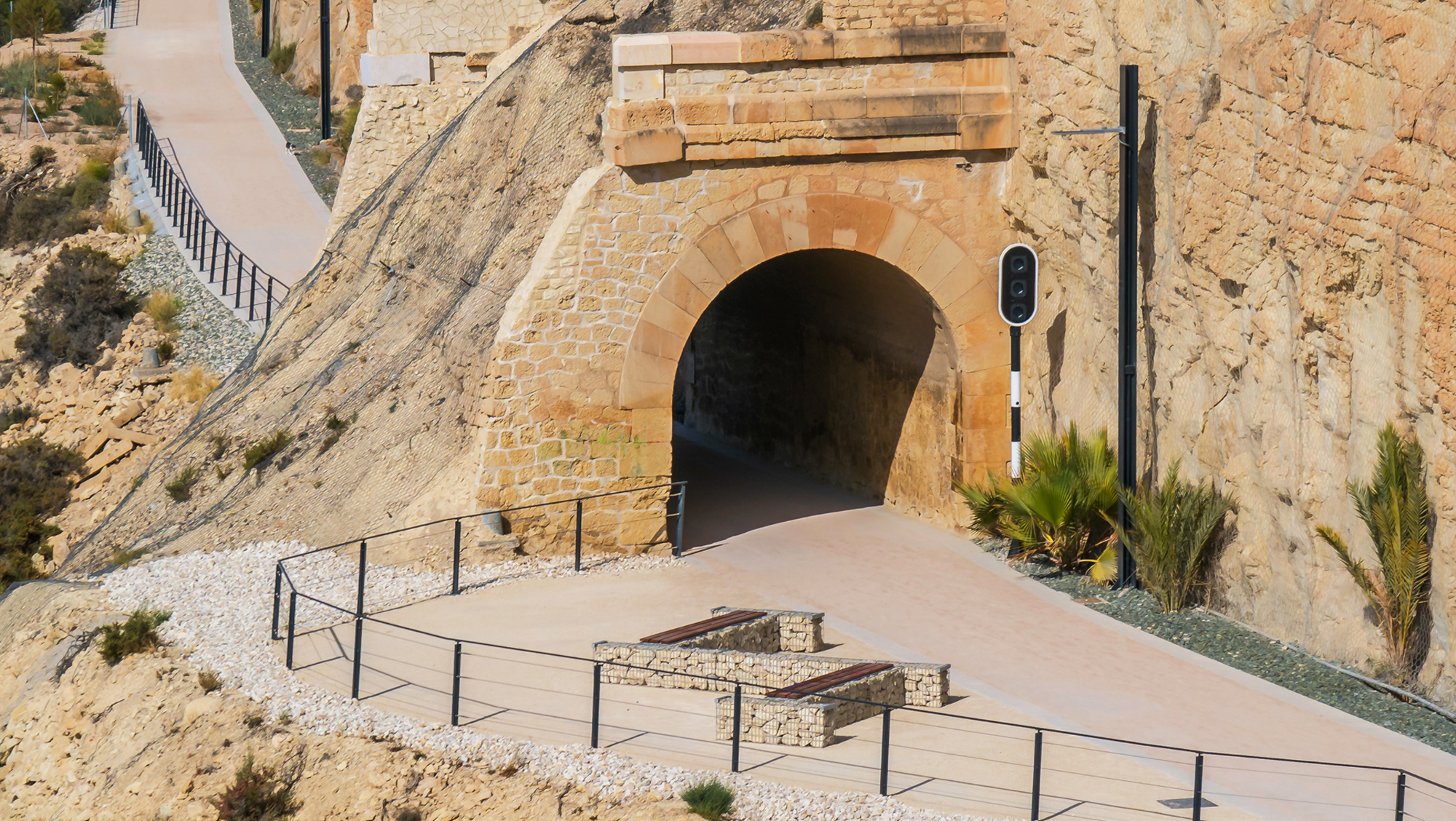
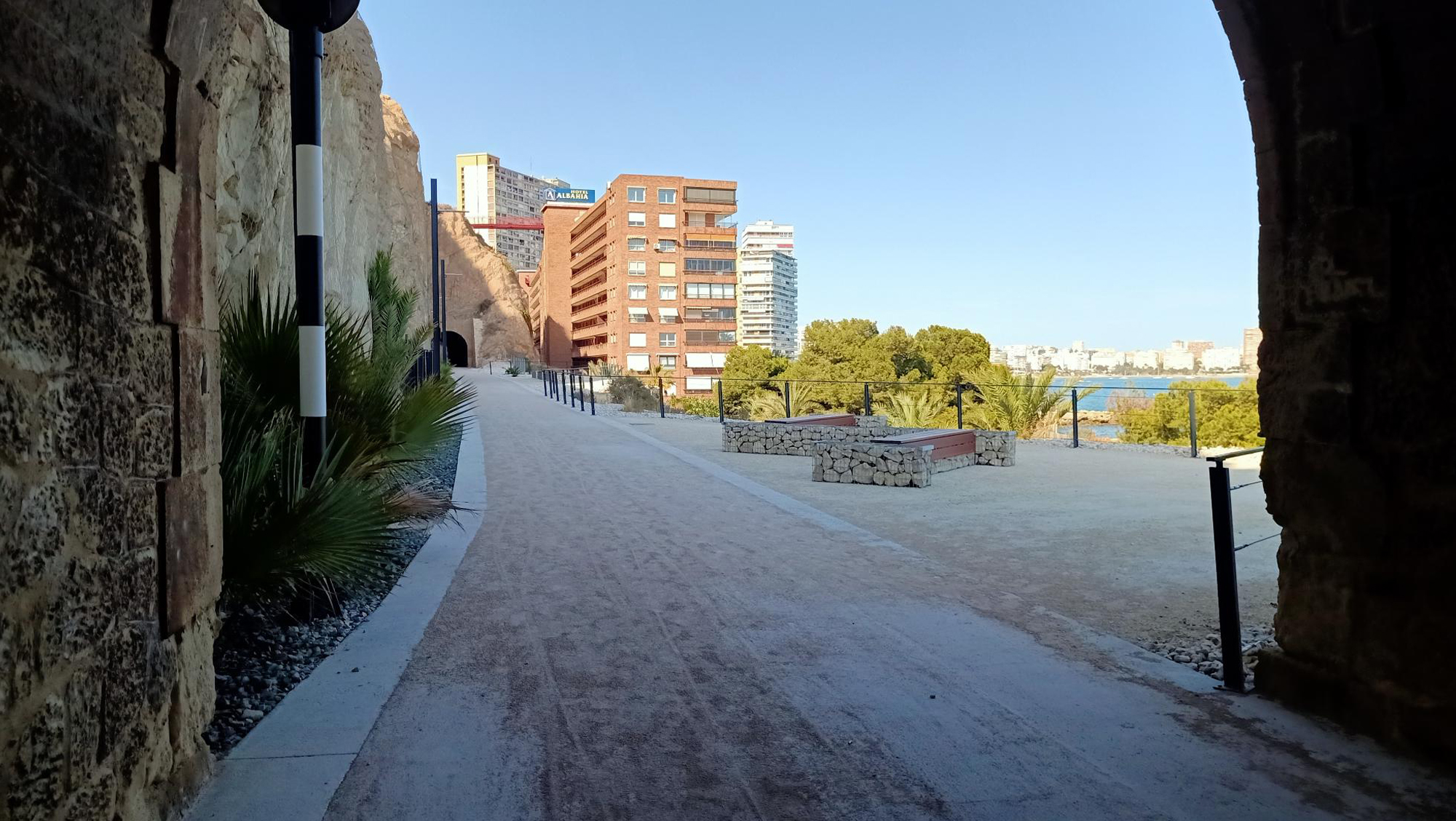
• Mirador Tunnel (15 m) — structural rehabilitation of the cut‑and‑cover tunnel, slope stabilisation works, and adaptation of the existing esplanade for the creation of a viewpoint area.
• Rocafel Tunnel (80 m) — restoration of the masonry at both portals and repair of defects in the walls and vault.
• Reurbanisation of the former Finca Adoc Halt — creation of a rest and gathering area with universal accessibility to the alignment, while preserving the site’s industrial railway character.
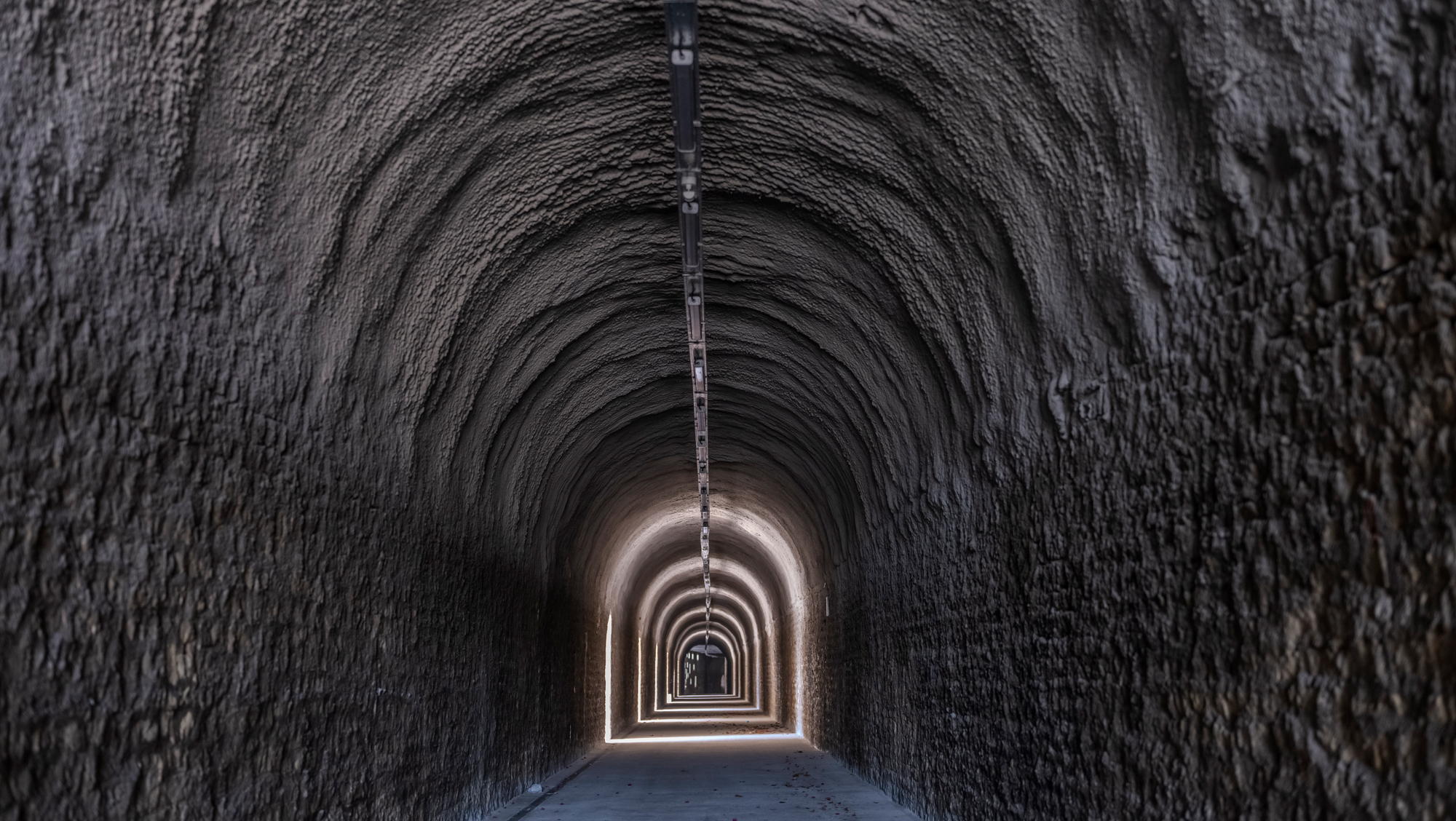
• Finca Adoc Cut‑and‑Cover Tunnel (320 m) — specific enhancement of the structure, including rehabilitation of its various structural typologies—some uncommon in cut‑and‑cover construction—and the opening of ventilation shafts and transverse accesses to allow natural light, ventilation, and improved connection with the surrounding urban fabric.