Skip links

Underpass on Beniardá Avenue Below the AT‑002_B‑1 railway infrastructure (TRAM Alicante Line 9), Benidorm

16 months

EXECUTON PERIOD

€5,159,663.16

TOTAL INVESTMENT OF THE WORKS (VAT INCLUDED)

Background

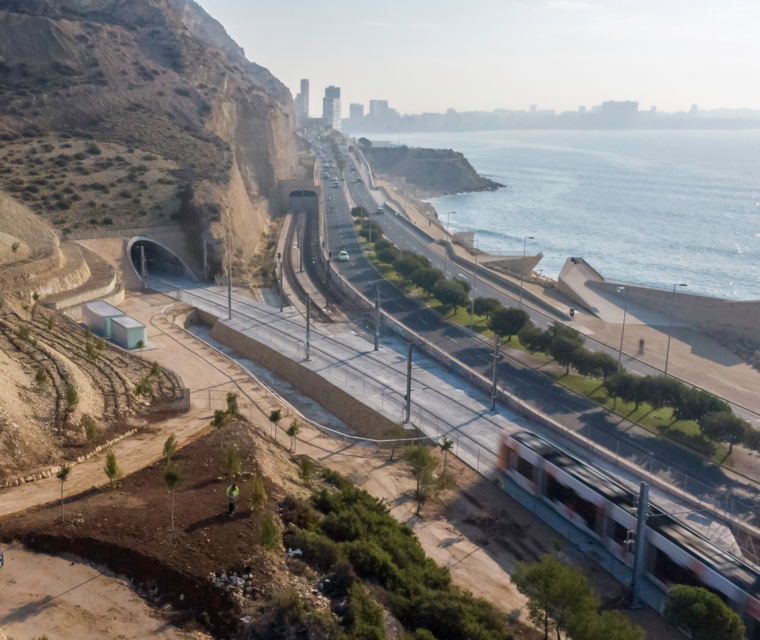
The project area is located on TRAM FGV Line 9 between Benidorm and Alicante, specifically at the level crossing AT‑002_B‑1, which intersects Beniardá Avenue (Benidorm).

Beniardá Avenue is currently one of the main thoroughfares in Benidorm, connecting the municipality with major regional routes such as the N‑332 and the AP‑7. It carries a high volume of traffic, which results in significant congestion at the level crossing every time the TRAM passes, increasing the likelihood of a potential accident. The planned intervention will eliminate traffic bottlenecks caused by the level crossing and improve traffic flow along this avenue.


The solution

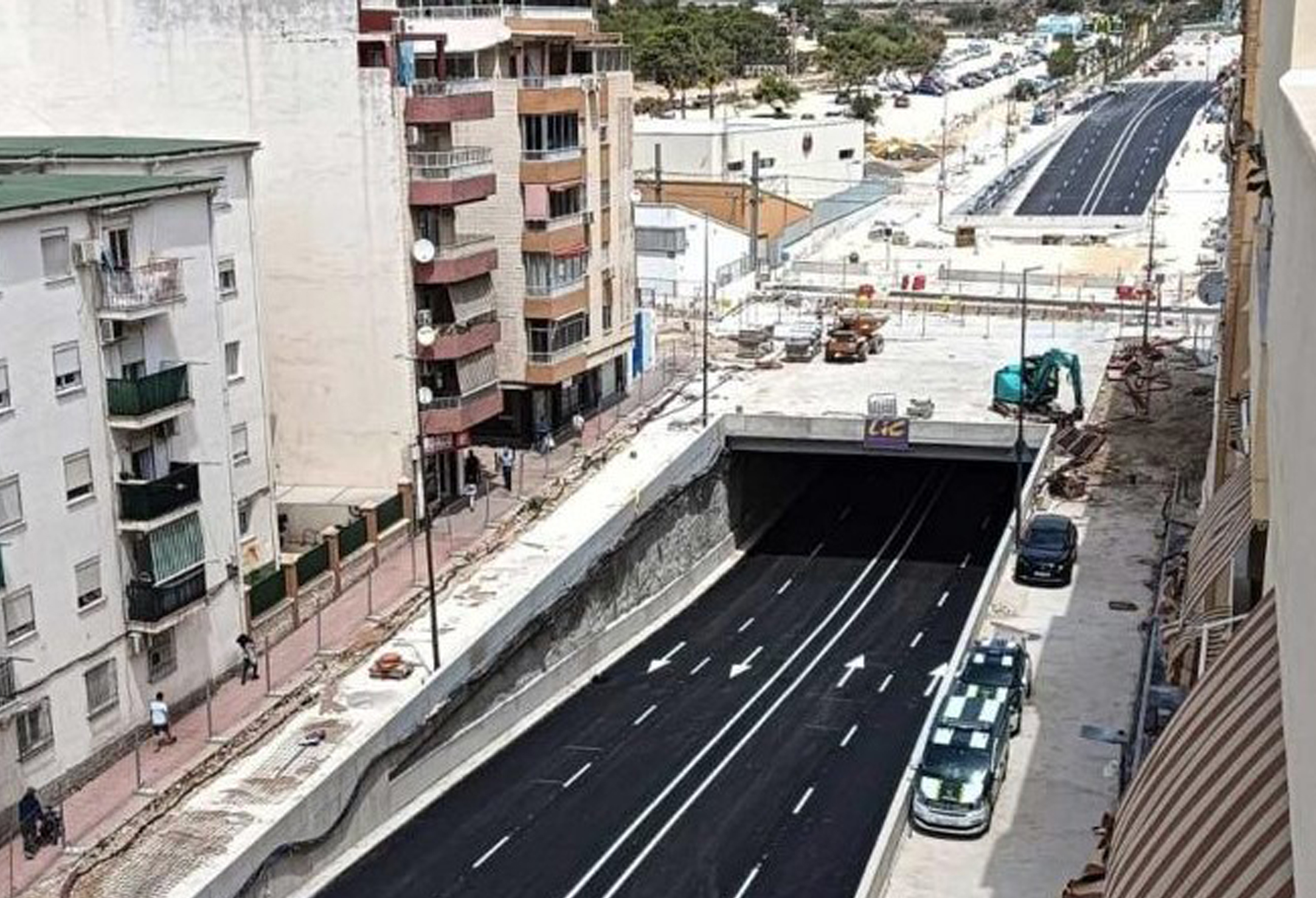
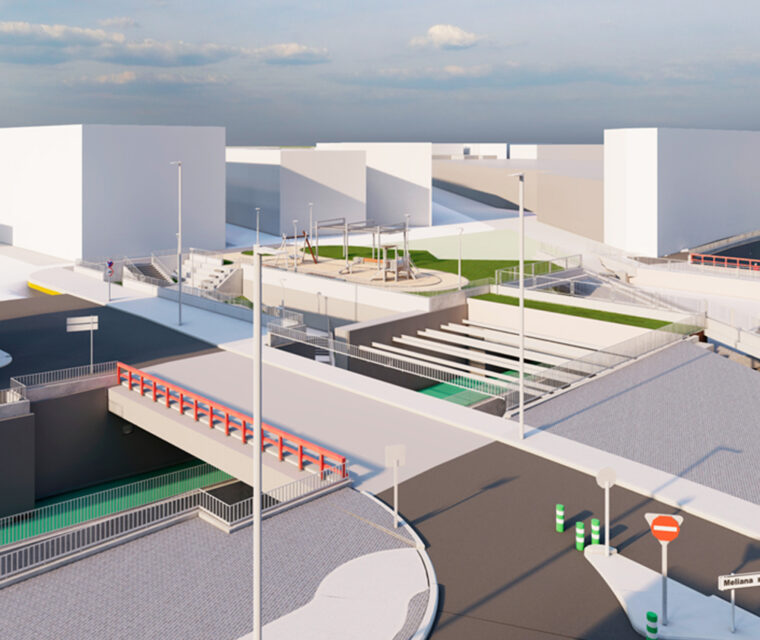
An underpass beneath TRAM Line 9 — four traffic lanes maintained, level crossing eliminated, congestion resolved.

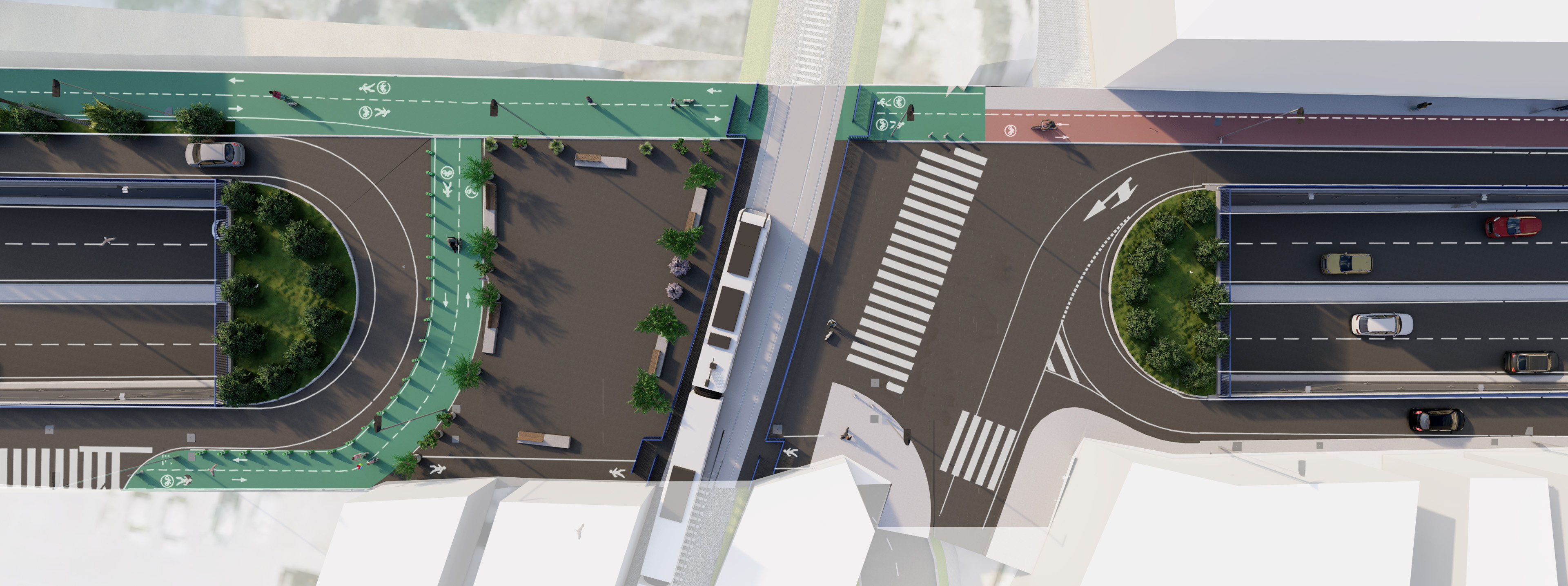
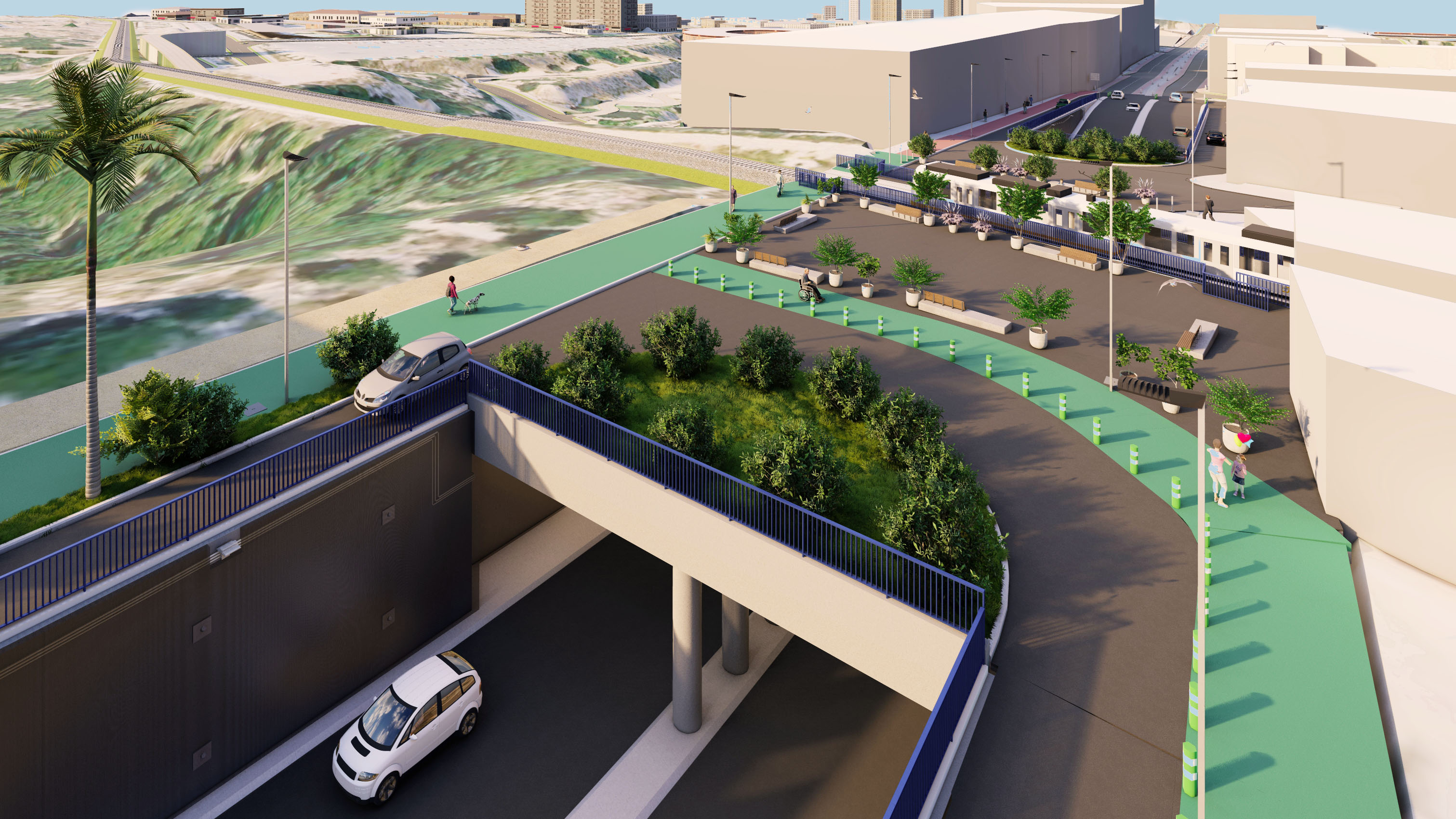
The project included the construction of a surface‑level platform to allow the integration and future adaptation of a tramway solution. The main traffic lanes of Beniardá Avenue were built as an underpass, providing a vertical clearance of 5–5.5 metres to avoid the road crossing the TRAM tracks at grade.

The platform also manages secondary turning movements and access to adjacent parking and Calle de la Estación.

This platform was used to implement surface‑level pedestrian and cycle‑pedestrian crossings, ultimately enabling the full integration of the tramway infrastructure.

Project Complexity

  • Main access road to Benidorm, with an AADT of 25,000 vehicles/day and summer peaks reaching 30,000 vehicles/day.
  • Increase in service frequency and operations on TRAM Lines L1 and L9.
  • Long and frequent barrier‑down times at the level crossing, resulting in significant congestion of road traffic.
  • Commissioning of the Benidorm Intermodal Station.
  • The tram network is characterised by its close integration within the urban fabric.
  • Presence of shops, garages and building entrances along the corridor.
  • Interaction with urban traffic, pedestrian flows and established itineraries.
  • Geometric constraints when fitting the ramp layouts due to adjacent intersections within the road network.
  • Underpass solution, maintaining the four existing traffic lanes along the main carriageway of Beniardá Avenue.
  • Cyclo‑pedestrian circulation remains at surface level through the existing signalised crossings.
  • Service roads are created on both sides of the underpass to provide access to adjacent properties and buildings.
  • Structural preparation for future actions, including:
    • Double‑track configuration.
    • Full tramway integration.
  • Particularly complex interventions in dense urban areas.
  • Need to preserve existing access to properties, or to provide alternative integrated solutions.
  • Utility relocations required, due to:
    • ConcentraciónHigh concentration of urban infrastructure.
    • Very limited space for service relocation, especially along the sides of the underpass.
  • Requirement for coordinated works extending beyond the strict limits of the level‑crossing area.
  • Urban and road network integration is genuinely complex in dense, live environments.
  • Railway safety, road safety and urban mobility must be designed as one system — not in isolation.
  • Technical constraints included:
    • Incomplete or outdated utility records
    • Data reliability gaps affecting planning accuracy
    • Zero tolerance for rail service interruption — no diversions, no alternatives
    • Highly constrained sequencing due to simultaneous interferences
    • The inherent complexity of building in a live, dense urban context
Cookie Policy
See your Privacy Settings to learn more.
Home